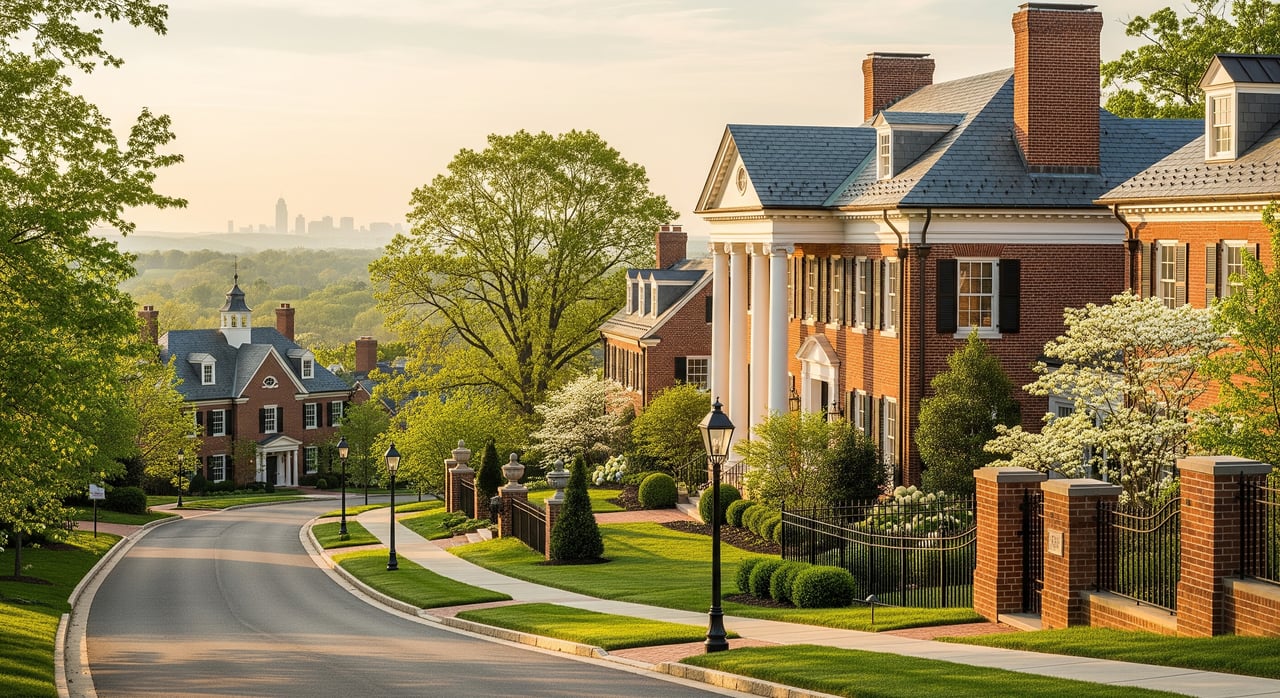
Your Fairfax VA Neighborhoods Guide to Choosing Well
Real Estate Jennifer Fang February 5, 2026
Real Estate Jennifer Fang February 5, 2026
Wondering which Fairfax neighborhood fits your next chapter? You want the right commute, the right home style, and a community that supports your daily routines without stretching your budget. In this guide, you’ll learn how to compare Fairfax City and nearby neighborhoods by commute, housing style, amenities, price positioning, and schools, then build a confident shortlist. Let’s dive in.
Before you zero in on a map pin, outline what matters most. Rank these in order and use them to filter options.
Fairfax sits along major regional routes. I‑66 is the main east to west corridor into DC, and traffic is often heavy during peak hours. The I‑66 Express Lanes can change travel patterns and costs for drivers who choose them. For project details and lane guidance, review the Virginia Department of Transportation’s I‑66 information on the VDOT site.
The Capital Beltway, I‑495, links you to Tysons and other job centers, while Route 50 and Fairfax County Parkway help with cross‑county travel. If you plan to use Metro, the closest Orange Line stations for many Fairfax addresses are Vienna or West Falls Church. Check station locations and trip planning on WMATA’s Metro maps and schedules.
Local bus service helps bridge the last mile. The Fairfax Connector runs routes that connect neighborhoods to shopping hubs, park‑and‑ride lots, and Metro stations. Some commuters use Virginia Railway Express for trips to DC, with stations outside the immediate Fairfax core. If rail is on your list, see schedules and stations on VRE.
Quick testing tips:
You get a lively historic core with shops, restaurants, and regular events in Old Town. Housing includes older single‑family homes, townhomes, and condos, with pockets of newer infill near Fairfax Boulevard and the George Mason University corridor. Lots are smaller near downtown and larger at the edges, and many homes have been updated over time. Expect car access to I‑66 and Route 50, with nearby Vienna or West Falls Church for Metro.
Mantua offers mid‑century ranches and split‑levels on established, tree‑lined streets. It attracts buyers who want classic suburban yards and single‑family homes with room to update. Daily life is centered on local parks and shopping along Braddock Road and Guinea Road. It is a car‑forward commute with convenient access to I‑495 and I‑66, and most residents drive to Metro.
Fairfax Acres refers to small enclaves, and boundaries can vary by listing, so confirm in the MLS or with county maps. You will find a mix of single‑family homes and townhomes built in the mid to late 20th century. These pockets tend to be quiet and residential with nearby parks and schools. Commutes are mostly by car with reasonable access to major arterials.
Greenbriar describes several communities across Fairfax County, so verify the exact sublocation when you search. Expect planned subdivisions with neighborhood parks and a mix of townhomes and detached homes. It is popular with buyers who want community amenities and a balanced commute. Access to I‑66 and I‑495 varies by subarea, and the lifestyle is generally car‑centric.
Fair Oaks is a larger submarket near Fair Oaks Mall and the Fairfax County Parkway, with many housing options. You can choose from condos and townhomes near retail to larger single‑family homes from the 1970s through the 1990s, plus some newer infill. The area offers extensive shopping, dining, medical services, and parks. Commute routes include the Parkway, I‑66, and Route 50, although peak congestion can be significant on those corridors.
Use these quick profiles to match your priorities to neighborhoods.
Most addresses here fall under Fairfax County Public Schools. Always confirm the current school assignment for a specific property, since boundaries change over time. Use the FCPS boundary lookup and school resources to verify.
Fairfax County Park Authority maintains trails, playgrounds, and recreation centers throughout the area. Explore parks, class schedules, and trail maps through the Fairfax County Parks website. You will also find a robust childcare and preschool market, especially near GMU and major activity centers.
When comparing schools, focus on your family’s priorities such as programs, schedules, and before or after care. Visit campuses, talk to administrators, and review publicly available data to inform your decision.
Fairfax City and Fairfax County generally report favorable safety compared with national averages. Still, conditions vary by block. Review recent incidents and trends with Fairfax County Police crime data and visit at the times you will use local parks and amenities.
Future development can influence value and lifestyle. Mosaic District expansions, Fairfax Corner infill, and Fair Oaks Mall corridor proposals are examples of projects that can add services and change traffic patterns. For current plans and rezonings, check Fairfax County Planning and Development and the City of Fairfax planning pages.
Follow this simple path to narrow your options and buy with confidence.
Ready to explore homes that match your shortlist? For tailored guidance, local insights, and a smooth search process, connect with Jennifer Fang Homes.

Real Estate
Real Estate
Lifestyle
Real Estate
Real Estate
Real Estate

Real Estate
Real Estate

Lifestyle
Explore a group of experts who combine personalized service with top-tier market knowledge to achieve extraordinary results.