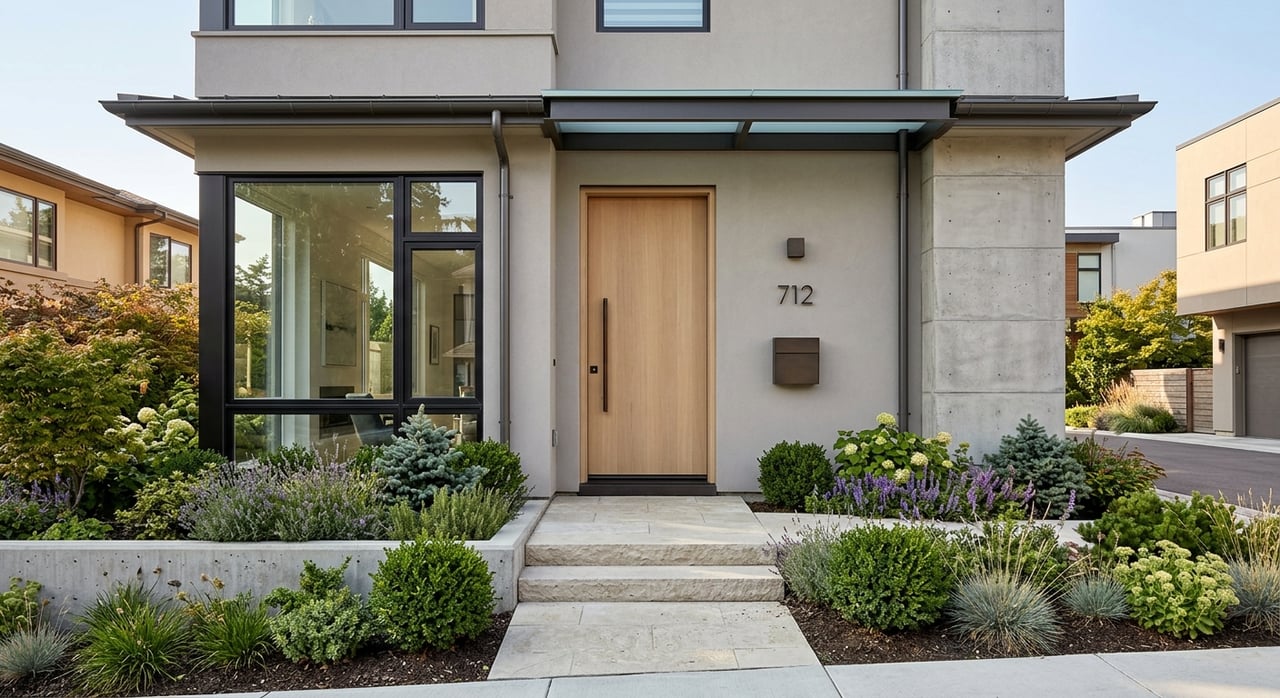
Living Near Tysons or Central McLean: Which Fits Best?
July 2, 2026
July 2, 2026
Trying to choose between living near Tysons and central McLean? You are not alone. Many buyers love this part of Fairfax County but get stuck deciding between a more urban, transit-connected lifestyle and a more traditional residential setting. The good news is that both areas offer strong advantages, and the right fit usually comes down to how you want to live day to day. Let’s break it down.
The biggest difference is simple: Tysons functions as Fairfax County’s urban center, while central McLean feels more like an established residential community.
Fairfax County describes Tysons as the county’s downtown, with four Silver Line Metro stations and an ongoing push toward walkable, mixed-use development where people can live, work, and spend time in the same area. By contrast, the broader McLean planning district outside Tysons is described as predominantly stable, low-density residential fabric. That creates two very different living experiences, even when the addresses may be close together.
If you are deciding between the two, it helps to think less about distance and more about rhythm. One side is built around transit, mixed-use convenience, and a faster pace. The other is centered on neighborhood streets, larger homes, and a more residential feel.
Living near Tysons tends to appeal to buyers who want convenience close at hand. Fairfax County’s long-term planning for Tysons focuses on walkability, transit-oriented redevelopment, connected streets, and spaces that support everyday activity beyond the workday.
In practical terms, that can mean easier access to Metro, more nearby retail and service options, and a setting that feels more active throughout the week. Tysons is also supported by bike facilities and ongoing transportation improvements, which reinforces that more connected, mixed-use lifestyle.
For many buyers, this part of the market lines up well with condo, apartment, or lower-maintenance townhome living. Census data supports that pattern. Tysons has an owner-occupied housing rate of 34.3%, a median owner-occupied home value of $640,000, and an average household size of 2.01.
Those numbers do not define every property, but they do help paint the broader picture. The housing mix and household size in Tysons point to a more compact, lower-maintenance style of living compared with central McLean.
Central McLean offers a different everyday experience. It is better understood as a residential community first, with local commercial areas supporting neighborhood life rather than driving it.
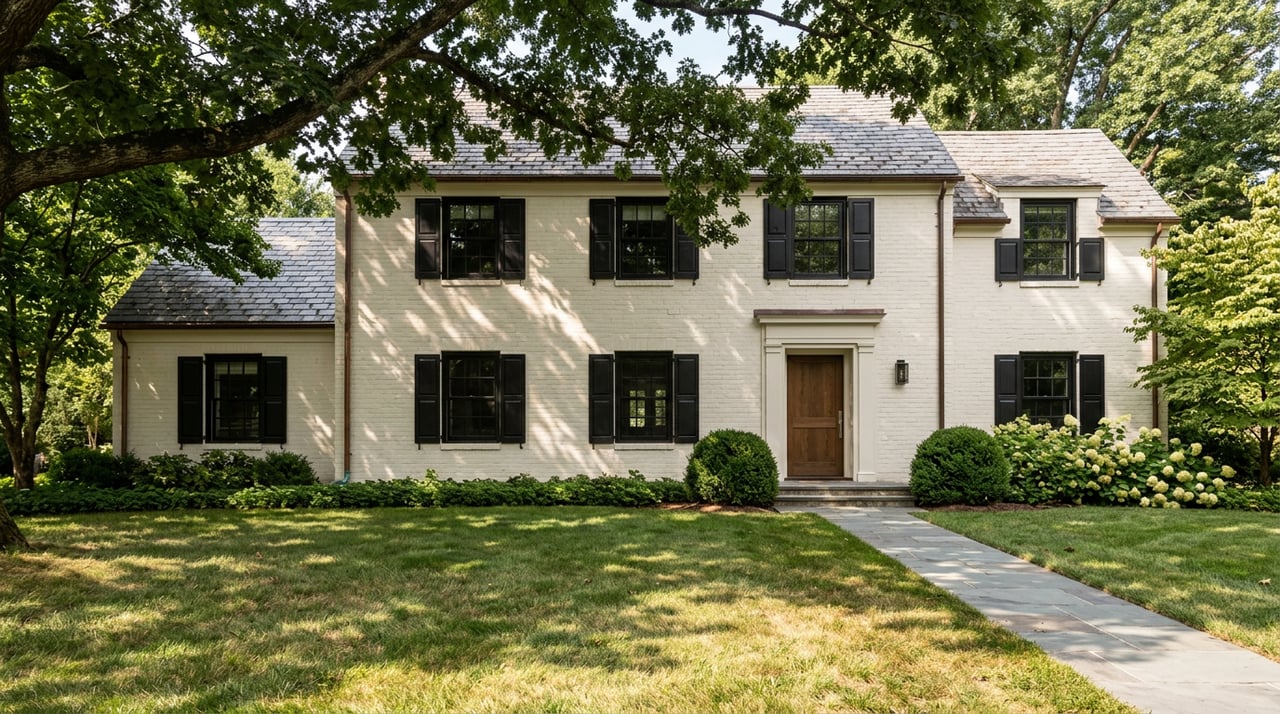
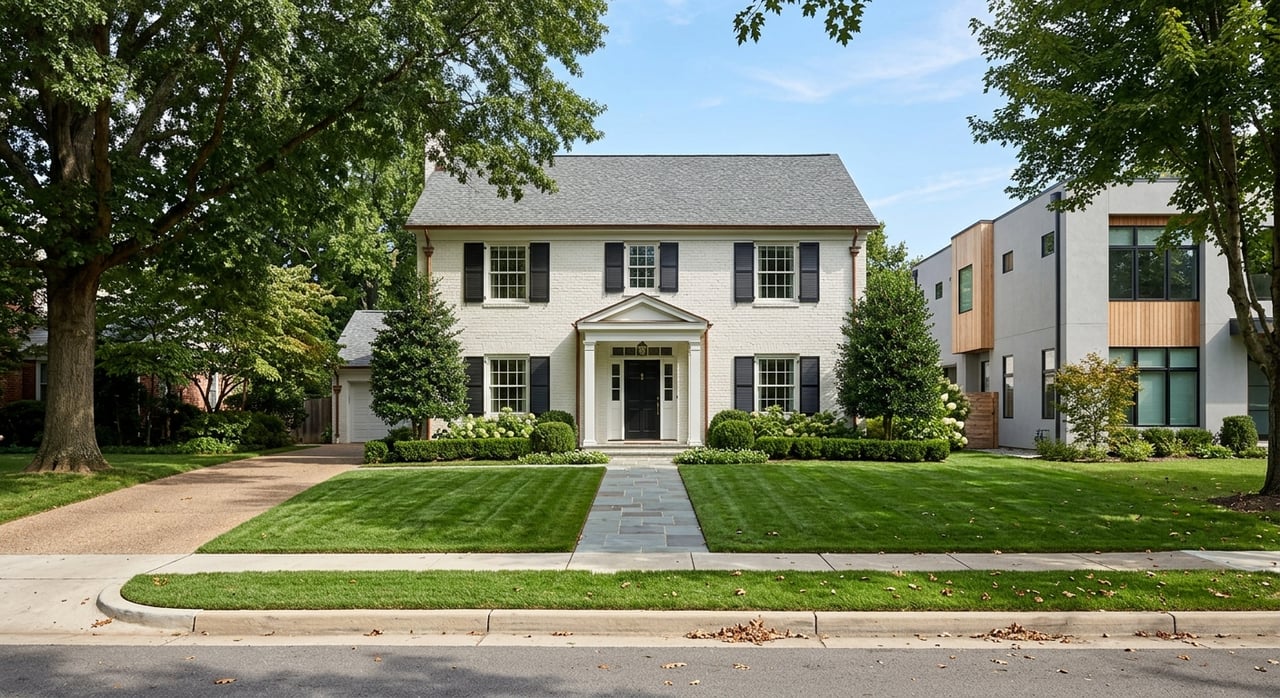
Fairfax County describes much of the McLean planning district as low-density residential, including large-lot single-family homes. That gives many parts of central McLean a quieter, more settled street pattern than what you find around Tysons.
This is often what buyers mean when they say they want a more traditional neighborhood feel. Streets tend to feel more residential, and the area’s identity is tied less to a major mixed-use center and more to the surrounding community.
Census data also reflects that difference. McLean has an owner-occupied housing rate of 86.1%, a median owner-occupied home value of $1,412,700, and an average household size of 2.88.
Taken together, those numbers align with a market that leans much more heavily toward owner-occupied homes and larger households. If you picture detached homes, longer-term ownership, and a more established residential setting, central McLean is usually the stronger match.
Not every part of McLean is purely low-density or fully suburban in feel. The McLean Community Business Center, generally around Chain Bridge Road and Old Dominion Drive, offers the most compact, mixed-use pocket within McLean itself.
Fairfax County describes the CBC as a mixed-use center that should preserve community-serving retail while keeping office, retail, and residential uses at a scale that supports a pedestrian-oriented character. The county is also studying traffic-calming and street design changes to improve conditions for walking and biking.
That makes the CBC a useful middle ground in this conversation. If you want some local shops and a more connected feel without stepping fully into Tysons’ larger-scale urban environment, this part of McLean may be especially appealing.
For transit access, Tysons has the clearer advantage. Fairfax County says roughly three-quarters of Tysons development will be within a ten-minute walk of Metro, and the area is organized around four Silver Line stations.
That matters if you want rail to be part of your everyday routine rather than an occasional option. Tysons is being planned around transit in a way that central McLean is not.
Central McLean still has access to Metro, but it depends much more on the exact address. WMATA notes that the McLean station sits off I-495 with access from Route 123 and is close to Tysons Corner and major employment centers.
In real life, that means some McLean homes may still work well for commuters, but the neighborhood as a whole is not structured around multiple stations and a walkable transit grid. Travel through the district is also shaped by major roads including I-495, I-66, Route 123, and the George Washington Memorial Parkway.
If walkability is high on your list, Tysons is generally the stronger fit. Fairfax County is actively building it as a walkable urban center with connected streets, pedestrian improvements, and transit-oriented growth.
That does not mean every block will feel equally walkable today, but the long-term direction is clear. The area is designed to support more movement on foot, by bike, and by transit.
Central McLean can still offer a pleasant day-to-day experience, especially near the CBC, but it is not planned on the same scale for walkable urban living. In most cases, you should expect a more residential pattern where driving plays a larger role.
Your preferred home type can be one of the fastest ways to narrow this decision. If you want a condo, an apartment-style setting, or a home with less exterior upkeep, living near Tysons may feel more natural.
That is because the Tysons-area profile aligns more closely with compact housing and lower-maintenance living. Smaller average household size and lower owner occupancy are consistent with that kind of housing stock and lifestyle.
If you want a detached home and a more traditional ownership pattern, central McLean is usually the better fit. County planning language and current Census data both point in that direction.
This does not mean you will only find one housing type in each area. It does mean the overall market character is different, and that character often shapes inventory, pricing, and lifestyle expectations.
One of the biggest differences between these two areas is the way daily life feels. Tysons is being built as a larger-scale mixed-use district with public gathering places and civic uses integrated into that broader environment.
Central McLean feels more neighborhood-centered. Fairfax County notes that the McLean community is served by a community center funded by a special property tax, and county goals for the McLean CBC focus on preserving community-serving retail and strengthening local sense of place.
That difference can matter just as much as square footage or commute time. Some buyers want energy, convenience, and access. Others want a quieter residential backdrop with a smaller-scale local core.
If school assignments are part of your home search, it is important to verify by exact address. Fairfax County Public Schools uses an address-based Boundary Locator, and the district notes that school boundaries can change.
FCPS also states that approved 2026-27 boundary changes take effect on August 24, 2026. In other words, neighborhood name alone is not enough to confirm school assignment.
This is especially important in a place like McLean, where buyers may compare homes that feel geographically close but fall into different assignment patterns. The best approach is to confirm each property individually during your search.
If you are still torn, focus on the parts of daily life that matter most to you. Usually, your answer becomes clearer when you think beyond the map.
You may prefer living near Tysons if you want:
You may prefer central McLean if you want:
There is no universal winner here. The better choice depends on whether you want your home base to feel more connected to an urban center or more rooted in a classic residential community.
For buyers exploring McLean, this is exactly where neighborhood-level guidance matters. The right block, building, or pocket can make all the difference. If you want help comparing options near Tysons or in central McLean, Jennifer Fang Homes offers personalized, neighborhood-first guidance to help you find the right fit.

Explore a group of experts who combine personalized service with top-tier market knowledge to achieve extraordinary results.